


Understanding Passive Crossover and Active Crossover
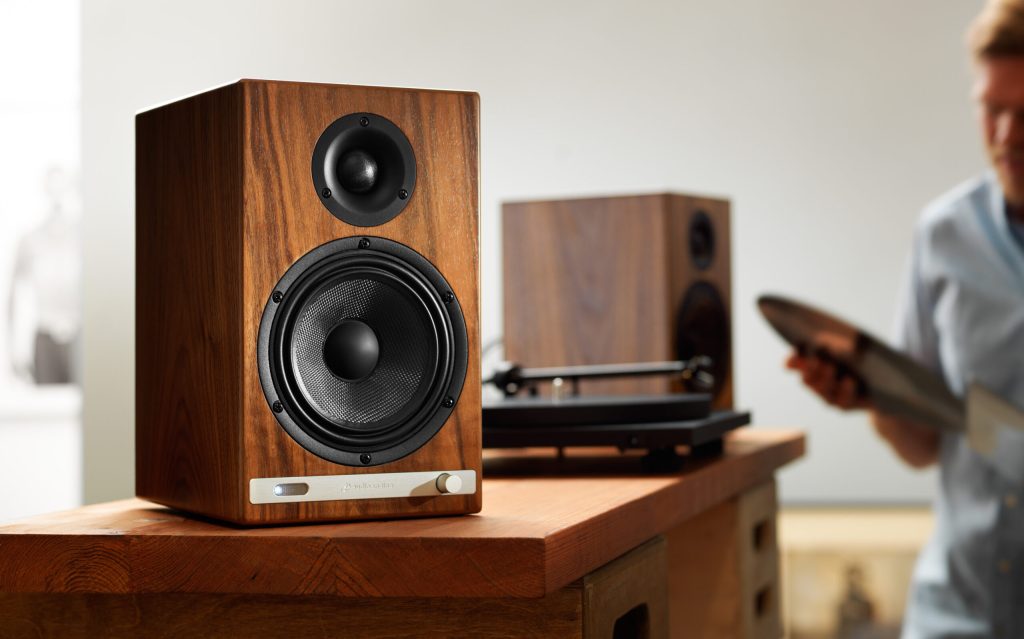
Every great speaker system depends on one key decision: how to split the sound between drivers. You wouldn’t send deep bass into a tweeter, and you wouldn’t expect a woofer to handle crisp highs. That’s why every well-designed speaker includes a active/passive crossover, a circuit that sends the right frequencies to the right components.
There are two main types of crossovers used in audio: passive crossovers and active crossovers. Both aim to separate frequency bands accurately, but the method and impact on performance are very different.
At Audioengine, we use custom passive crossover networks in our powered Home Music Systems. This article breaks down how these circuits work, why they matter, and why we chose to design them the way we do.
What Is an Audio Crossover?
An audio crossover is a filter that splits a full-range audio signal into separate frequency bands. It directs low frequencies to the woofer, high frequencies to the tweeter, and in some cases, mid frequencies to a midrange driver. This filtering ensures that each driver operates within its intended frequency range, improving clarity and preventing distortion or damage.
Crossovers are not optional. If you want clean separation, smooth response, and distortion-free performance, you need a crossover system that does more than just block out the extremes. It needs to shape the signal for musical performance.
Passive Crossovers: Simple, Efficient, and Tuned by Ear
A passive crossover is placed after the amplifier in the signal chain. It uses analog components like capacitors, inductors, and resistors to split frequencies and direct them to the correct driver.
How Passive Crossovers Work:
- Capacitors block low frequencies and act as high-pass filters, usually connected to the tweeter.
- Inductors block high frequencies and act as low-pass filters, typically used with the woofer.
- Resistors help balance output levels between drivers or compensate for impedance.
These components can be arranged to create first-order (6 dB/octave) or second-order (12 dB/octave) filters. In Audioengine products, we primarily use second-order crossover designs, which provide better control and reduce unwanted frequency overlap.
Because passive crossovers work after amplification, they don’t require any additional power supply. This makes them stable, reliable, and compact. But that doesn’t mean they’re simple. A well-designed passive crossover takes careful tuning, matched components, and a deep understanding of how electrical filters interact with real-world acoustic systems.
What Makes Audioengine’s Passive Crossovers Different
In most off-the-shelf speakers, crossover design is an afterthought. That’s not the case here. Every Audioengine Home Music System is built from the ground up with crossover design integrated into the entire system architecture.
Key Benefits of Our Crossover Design:
- Matched components
Each crossover is tuned to the specific drivers and amplifier inside the system. We do not use a one-size-fits-all design. - High-quality materials
We use air-core inductors, low-tolerance film capacitors, and non-inductive resistors for consistency and performance. - Phase integrity
Second-order crossovers can invert phase. We account for this by adjusting polarity or driver alignment to maintain clean phase response at the crossover point. - Thermal stability
Component values can shift under heat. We select parts that hold their performance even at high volume levels. - Cabinet interaction
Our crossovers are tuned in the final cabinet, not in isolation. This ensures that real-world performance matches what you hear, not just what appears in measurement graphs.
This system-wide approach is what allows Audioengine products to deliver tight, balanced sound without the need for user tweaking. We do the hard work in the design phase so listeners can focus on the music.

What Is an Active Crossover?
An active crossover works before the amplifier, at line-level. It uses analog op-amp circuits or digital processing to separate frequencies before sending them to dedicated amplifiers for each driver.
This method gives the system designer more control. With an active crossover, you can change crossover frequencies, adjust slopes, delay signals to align drivers, and equalize each frequency band individually.
Benefits of Active Crossovers:
- More precise frequency control
- Ability to adjust filter settings
- Independent gain control per driver
- No passive components between the amp and the speaker
But those advantages come at a cost. You need one amplifier channel per driver, multiple power supplies, and sometimes a dedicated digital processor. This adds complexity, cost, and more points of failure. It also removes the simplicity and elegance of a self-contained system.
Why We Choose Passive Crossovers at Audioengine
Our Home Music Systems are built for everyday listening: clear sound, rich tone, and plug-and-play simplicity. That’s where passive crossovers shine.
Passive crossovers allow us to:
- Deliver full-range performance without external amplifiers
- Tune the crossover point for musical response, not just lab measurements
- Keep the amplifier and speaker matched for predictable, stable performance
- Avoid digital signal processing that might compress or color the signal
In short, passive crossovers help us deliver analog warmth and precision in a compact form factor. No software. No configuration. Just great sound.
What About Subwoofer Crossovers?
Subwoofer crossover integration is a little different. Our S8 Powered Subwoofer includes a variable low-pass crossover, which lets you select the exact point where the sub stops playing. You can blend it with your main Home Music System by ear.
The crossover knob is adjustable between 50Hz and 130Hz, giving you full control over your bass integration. We also include a phase switch, which helps synchronize the sub’s output with your main speakers, preventing cancellation and improving low-frequency impact.
This is still a fully analog system, fast, simple, and reliable.
The S6 Powered Subwoofer features the same analog crossover and phase control in a more compact enclosure, built for smaller rooms or desktop setups. It also includes the variable low-pass crossover and phase switch, giving you the same tuning flexibility and seamless integration with any Audioengine Home Music System.
Whether you’re adding tight, punchy low end in a compact space with the S6, or filling a larger room with deep bass using the S8, both subwoofers give you real-time, analog control over your system’s bass performance, no apps, no screens, no unnecessary processing. Just precision where it counts.

Conclusion: Why Crossover Design Should Never Be an Afterthought
If you care about music, you should care about how your system handles crossovers. Whether passive or active, this is the part of the system that determines how well each driver performs. It defines how clean the handoff is between woofer and tweeter, how accurate your imaging is, and how natural your music sounds.
At Audioengine, we stick to passive crossover networks because they offer the perfect balance of performance and simplicity. They allow us to design compact, high-fidelity Home Music Systems that don’t require tuning, software updates, or external gear. You just plug in, press play, and hear exactly what we built it to sound like.
No digital tricks. No guesswork. Just music the way it should be.